
Quick Answer
White residue on dark clothes after washing can have several explanations, including detergent or product residue, lint or tissue-like debris, loading or rinsing issues, and washer or dispenser buildup. Dark fabric makes pale material easier to notice, so check whether the residue is powdery, streaky, film-like, fibrous, or paper-like. Whether it affects one garment or several loads can help decide what to check next; do not assume that adding more detergent or using a hotter cycle will solve every case.
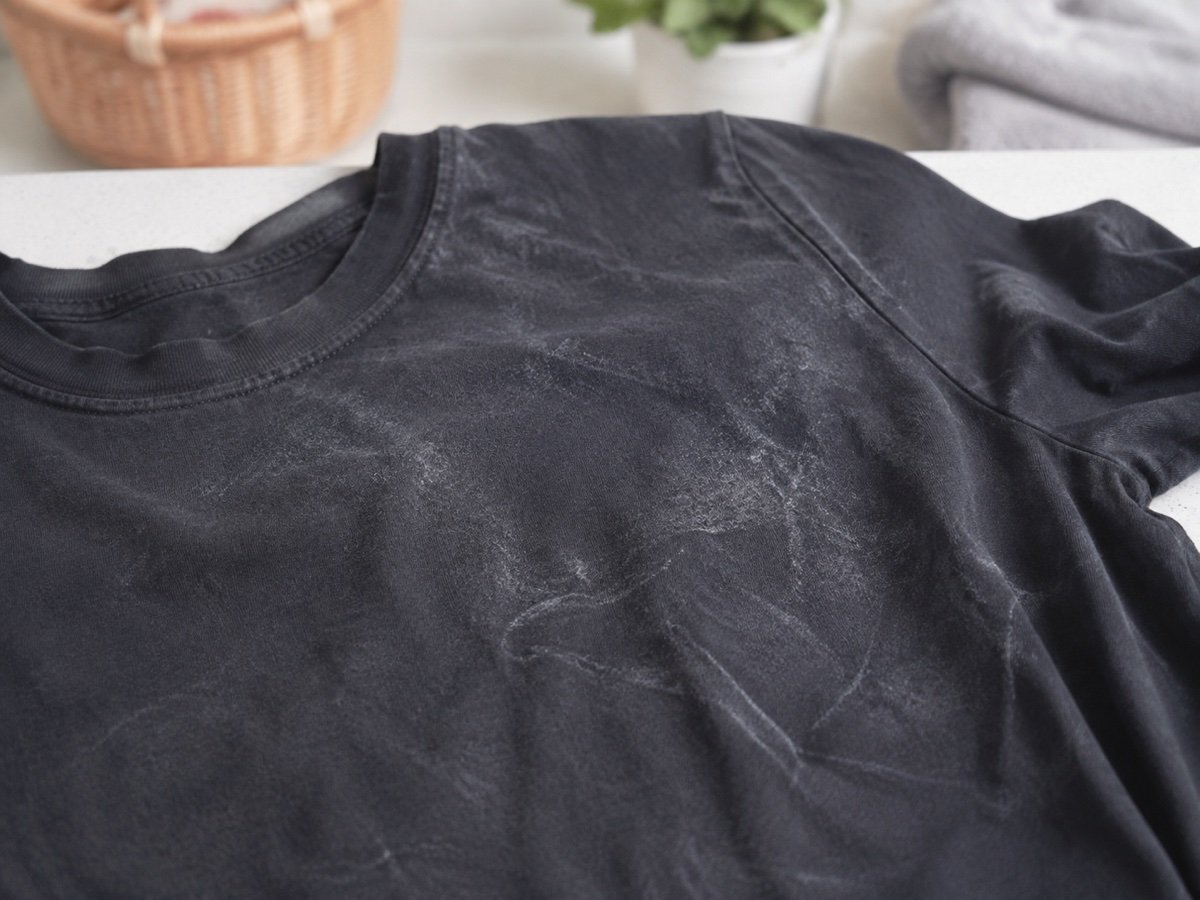
Quick Diagnosis: What does the residue look like?
The appearance is a starting point, not a guaranteed identification.
Powdery or chalky material
If it brushes or rinses away, check detergent type, amount, dispenser use, and the washer’s cycle instructions.
White streaks or a wipeable film
Review product or additive use, the wash and rinse settings, and whether the pattern repeats across loads.
Loose fibers, lint, or tissue-like pieces
Check pockets, sorting, lint-producing items, and whether the washer tub needs attention.
Marks on folds or one garment
Check the care label, fabric, position in the load, and whether the mark behaves like removable residue.
Several garments or loads
Review the detergent process, dispenser, tub, and washer maintenance guidance.
Permanent or unusual marks
Do not force an oily, rust-like, permanent, or otherwise unusual mark into a detergent-residue diagnosis; check the garment or appliance support path.
Likely Causes
Detergent did not disperse or rinse as intended
Excess or incompletely dissolved detergent is one possibility, especially when the product, amount, load, or machine instructions do not fit the situation. Some manufacturer guidance also notes that detergent type, dispenser use, water conditions, and the selected cycle can affect residue in particular washer or product contexts.
Check the detergent label, the washer manual, and the garment care label together. Avoid treating a single brand’s dose, temperature, or cycle recommendation as a universal rule.
Detergent or product buildup in the dispenser or washer
Residue inside a dispenser, tub, or other washer area can become relevant when the same material appears on multiple garments or loads. A washer-related explanation is more worth checking when the machine itself shows visible buildup or has its own residue or odor.
Use the model’s maintenance instructions for inspection and cleaning. Do not assume that one internet recipe or a fixed cleaning schedule applies to every washer.
A crowded or poorly distributed load
Overloading or a load that cannot move freely can contribute to residue or lint remaining in, or transferring through, a wash. The exact effect depends on the machine and cycle. Review the washer’s loading guidance and try a load that is not crowded enough to restrict movement.
Lint, tissue, or paper transfer
Lint and paper or tissue debris can look like pale detergent residue on dark fabric. Towels and other lint-producing items may transfer fibers to fabrics that attract lint. Check pockets and sort lint producers from lint takers before treating a mark as a product problem.
Water or additive conditions
Water quality, mineral-related film, and interactions between detergent, softener, or other additives may be relevant in some product or washer contexts. They are not universal explanations for every white mark. If the residue looks like a film or repeats across loads, review the relevant product and appliance guidance rather than diagnosing “hard water” from appearance alone.
A garment-specific mark rather than removable residue
Dark fabric makes light material easy to see, but a permanent mark may be a different problem. Bleach damage, color change, rust-like staining, oily material, and other fabric issues should not be treated as confirmed detergent residue without further evidence.
What to Do
- Describe the residue before changing the routine. Note whether it is powdery, streaky, film-like, fibrous, paper-like, oily, or permanent. This determines which checks are relevant.
- Check the garment care label. Keep the garment within its stated washing and treatment limits before rinsing, rewashing, brushing, or changing temperature.
- Rinse or rewash removable residue if the garment allows it. Follow the washer and product instructions, and do not automatically add more detergent. For loose, dry residue, a soft brush may help if the fabric permits it.
- Review detergent type, amount, and compartment. Match the product and dose to the product directions, actual load, washer instructions, and care label. Do not switch to a fixed “best” product or amount without checking those instructions.
- Check the load size and distribution. Reduce crowding when appropriate and make sure the load can move as the washer manual describes.
- Check pockets and lint sources. Remove tissue and paper, and separate lint-producing items from fabrics that attract lint.
- Review the selected cycle and rinse guidance. Check temperature, water-level options, and extra-rinse settings only against the garment label, product directions, and the specific washer manual.
- Inspect the dispenser and washer for visible residue. If the model manual permits it, follow its instructions for cleaning the dispenser, tub, seal, or filter. Do not use a chemical mixture or unsafe disassembly.
- Compare another load. If a care-label-compatible rewash removes the mark from one item, check whether the same pattern returns with unrelated garments. Recurrence helps decide whether to focus on the item, product, load, or washer.
- Use manufacturer support when the issue persists. Contact the relevant detergent, garment, or washer manufacturer when residue remains, differs from removable powder or fibers, appears with machine faults, or affects repeated loads.
Change one routine variable at a time when practical. That makes it easier to tell whether the useful clue was product use, load handling, lint transfer, or the washer.
If That Didn’t Work
If a rinse or rewash did not remove the residue, do not move straight to stronger chemicals or repeat an unverified treatment.
- One garment only: Recheck its care label, fabric, folds, and whether the mark is actually removable residue.
- Several garments in one load: Review load size, sorting, pockets, detergent amount, dispenser use, and the selected cycle.
- Several unrelated loads: Inspect the dispenser and washer according to the model manual, and review product instructions.
- Residue visible in the dispenser or tub: Use the manufacturer’s cleaning and maintenance path rather than a universal recipe.
- Permanent, oily, rust-like, or otherwise unusual marks: Seek garment-care or appliance support instead of assuming detergent residue.
Do not use vinegar, baking soda, bleach, sanitizer, acids, or a DIY chemical mixture as a default solution. Never mix cleaning products.
Prevention
- Follow the garment care label and the detergent and washer instructions.
- Measure the product for the actual load instead of assuming more is better.
- Avoid crowding the washer and keep the load distributed as the manual recommends.
- Check pockets and sort lint-producing items from fabrics that attract lint.
- Use the correct detergent compartment and product type for the washer.
- Follow the washer’s dispenser, tub, seal, filter, and maintenance guidance.
- When residue repeats across unrelated loads, investigate the washer and product process rather than changing only one garment.
For more laundry troubleshooting, see the Laundry troubleshooting hub.
Sources
- Miele — Laundry has white residues — powder-like residue on dark fabrics and model-specific loose-residue guidance.
- Maytag — Clothing has White Residue — detergent, lint, loading, water, and washer-related contributors.
- LG USA Support — Lint on cloth after washing cycle — lint sorting, pockets, excess product, and tub-cleaning checks in a top-load context.