
Quick Answer
If there is water sitting in the drum after a wash, or the washer stops when it should drain, treat it as a drain-stage problem rather than a normal “wet clothes” result. Start with what the machine did: did the cycle finish, did it show a code, and is water still visibly pooled? Then make only the safe checks your model’s manual allows. A kinked drain hose, an installation issue, or a load that prevented the final spin can sometimes explain the problem, but repeated failures need service rather than more test cycles.
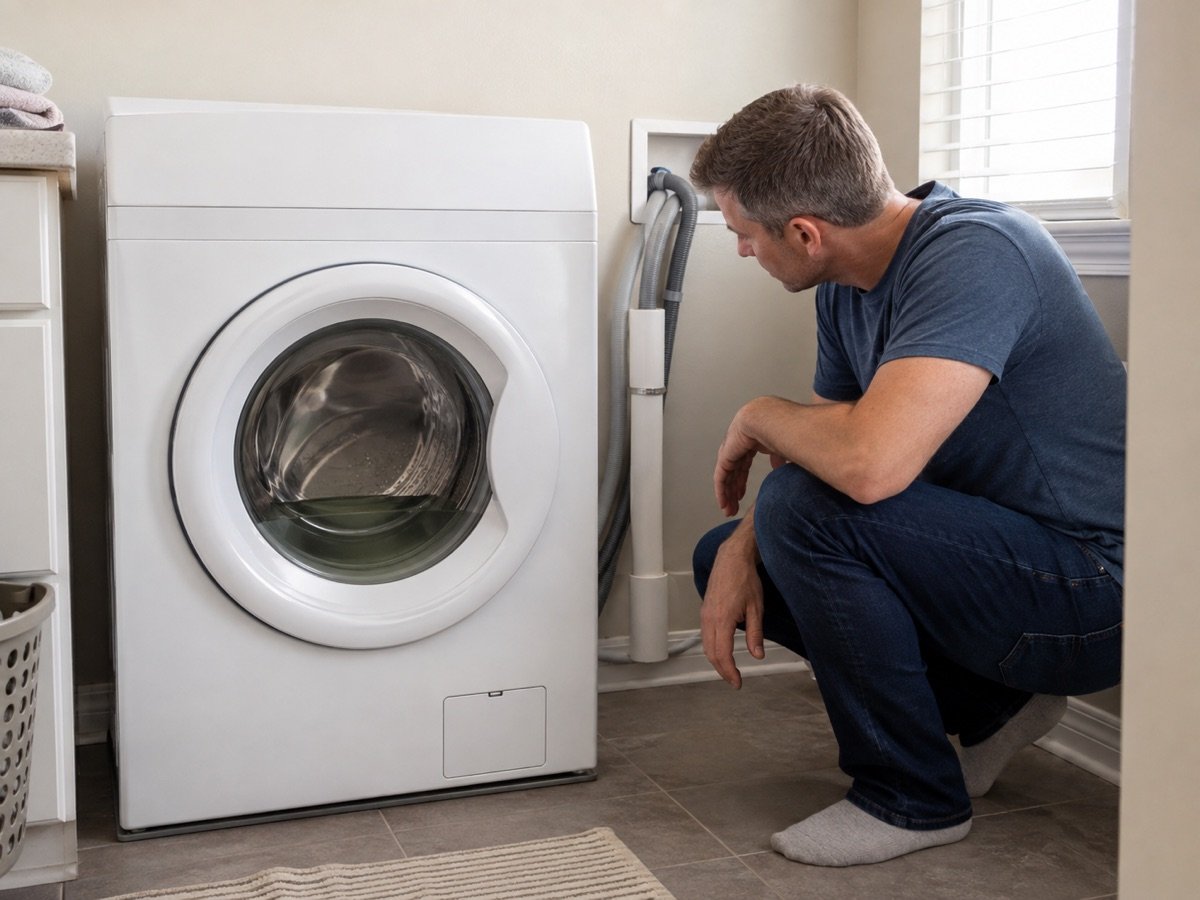
Quick Diagnosis: Did the Cycle Finish?
The display says the cycle ended, but water is pooled in the drum
Note the selected cycle and any message. Check the manual’s drain guidance before trying another cycle.
The timer stopped, keeps adding time, or the washer stopped mid-cycle
Record where it stopped and the exact code or blinking-light pattern. Use the model-specific error guidance.
The drum is empty but the clothes are much wetter than usual
Check the spin setting and whether a bulky load became unbalanced. See Why Are My Clothes Soaking Wet After Washing? for that separate path.
There is a leak, a burning smell, severe banging, or a new harsh noise
Stop using the washer and arrange service. Do not run another cycle to test it.
Do not force open a locked door or reach into a moving drum. If the most recent cycle used hot water, give the water time to cool before doing any manual-approved drain procedure.
If Water Is Still Sitting in the Drum
First, look for a message or code and take a photo of it. Error codes are not universal: the same-looking code can mean different things across brands and models. The owner’s manual or the manufacturer’s support page for your exact model is the right source for its meaning and any reset or drain option.
Next, inspect only what you can see safely. If the external drain hose is accessible without pulling out a heavy or stacked washer, look for an obvious kink, pinch, or damage. A hose that is bent behind the machine can restrict water flow. Do not disconnect the hose, pull the appliance away from the wall, or try to snake an internal line.
Also compare the visible hose setup with your model’s installation instructions. Hose depth in a standpipe, hose height, use of a guide, and the need to avoid an airtight connection are installation-specific. Depending on the model, a hose pushed too far into a standpipe, installed at the wrong height, or sealed tightly can contribute to drainage problems. Do not use a measurement from a different brand’s guide as a universal fix.
If correcting an obvious, external kink returns the hose to the manual’s specified setup, use only the model-approved drain or drain-and-spin option. If water still remains, the washer stops again, or you cannot verify the setup safely, arrange service.
If the Washer Stops Before It Drains or Shows an Error
A no-drain message, a cycle that pauses near the end, or repeated attempts to drain all call for a different response than a completed cycle with damp laundry. Record the exact code, the cycle, the load, and whether you heard water moving. That information is more useful to support than guessing which internal part has failed.
Follow the one user action stated for that code in your manual. For example, a model may ask you to correct a load imbalance or check the externally visible drain hose. If the same no-drain message returns after that documented action, stop restarting the program. Clearing a message or getting one successful drain does not prove the underlying problem is solved.
Do not remove panels, enter a service mode from an unrelated video, bypass a lid or door lock, or test electrical parts. A washer that cannot confirm it has drained may not proceed to spin, so an apparent spin problem can still begin at the drain stage.
If a Bulky or Unbalanced Load Was Involved
A blanket, comforter, bath mat, or one very absorbent item can bunch on one side of the drum. Some washers respond by retrying, slowing, or stopping the spin. That can leave extra water in the load—and in some cases may leave water in the tub—but it does not prove there is a blocked pump or hose.
If the machine allows the door or lid to open normally and its manual permits it, redistribute the load according to the manual. Do not pack in extra laundry just to change the balance. Then use the appropriate model-approved option once. A normal result after an unusual bulky load is a reason to observe the next ordinary load, not a reason to assume every future drain failure is harmless.
If ordinary, properly distributed loads now stop, show an imbalance message repeatedly, or leave water behind, move to service support. Do not keep running smaller loads as a permanent workaround.
Does Your Model Have a User-Accessible Filter?
Whether a washer has a filter or drain tube, and whether either is user-accessible, varies by exact model and owner’s manual. A filter is a valid user check only when your exact owner’s manual identifies it as user-accessible and gives the procedure.
Before following that procedure, read its warnings about power, hot water, and collecting residual water. If your manual does not show an accessible filter, the cover will not open easily, or you are unsure whether you are looking at a service component, stop. Do not force a stuck filter, reach into a pump housing, remove an internal hose, or disassemble a panel. A clean accessible filter also does not rule out every drainage or plumbing problem.
Slow Drain or a Problem That Keeps Returning
Slow drainage deserves attention even if the washer eventually finishes. Watch for a cycle that repeatedly extends, water that drains only after a second attempt, or a failure that comes and goes with ordinary loads. These patterns are not a reliable way to identify a pump, sensor, or blockage yourself.
Make one concise record instead of repeating troubleshooting: model number, exact code or light pattern, load type, selected cycle, whether water remained in the drum, visible hose condition, and what manual-approved action you tried. Give it to the manufacturer, a qualified appliance technician, or the landlord or laundry operator for a shared machine.
When to Stop and Arrange Service
Arrange service now if water remains after the manual’s allowed action; a no-drain or overflow error returns; the washer leaks; the drain hose is damaged; or the machine develops severe noise, violent movement, or an electrical/burning smell. Use support as well when the hose setup or filter access cannot be confirmed safely.
This guide is about water that will not leave the washer. If the drum is empty and the issue is only that clothing needs more water removed, use the soaking-wet clothes guide. For other published troubleshooting topics, visit the Laundry hub.