
Quick Answer
If clothes come out dripping wet, heavy, or wet enough to wring out after a wash, the washer removed too little water during draining or spinning. That does not automatically mean a major part has failed. Start by checking whether water is still sitting in the drum, whether the load was unusual or unbalanced, and whether the selected cycle included the spin you expected.
If this happened once with a bulky or unusual load, a load or setting issue is possible. If ordinary loads stay soaked, the spin keeps stopping, water remains in the drum, or a code appears, stop repeating the same cycle and use the model’s support guidance.
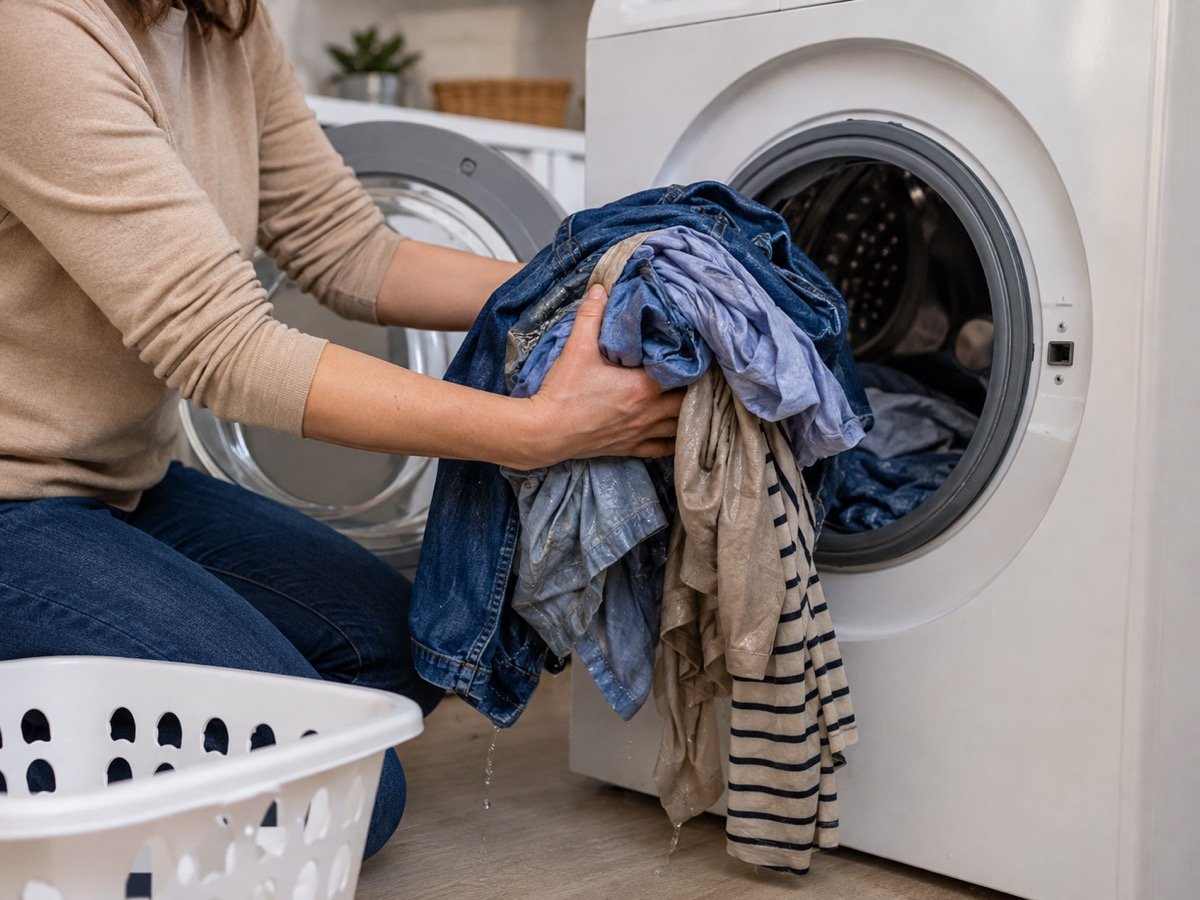
What to do with the wet load first
Check the care label and open the washer only when it is safe. Never force a locked door or reach into a moving drum.
If your washer has a model-approved Drain and Spin, Spin Only, or similar option, you may be able to run it once after checking for warning signs and following the owner’s manual. Treat that as a controlled next step, not proof that the problem is fixed. If the washer makes a new harsh noise, moves violently, leaks, stops before finishing, or displays a persistent fault, arrange service or operator support.
Do not add detergent or start a full wash just because the clothes are wet. First find out whether water removal finished.
Quick diagnosis: what do you see at the end?
Water is visibly pooled in the drum
Confirm that the cycle finished and note any code. Start with the model’s drain guidance.
The drum is empty, but clothes are unusually heavy
Check the spin setting, cycle choice, and load balance. This points first toward incomplete or reduced spinning, although it does not prove the drain system is clear.
It happened only with a blanket, sheet, towel load, or one bulky item
Compare the load and cycle with the owner’s manual. Bulky items can shift and cause the washer to reduce or retry the spin.
Every ordinary load is soaked
Compare the current behavior with how the washer used to perform. Check settings once, then move toward support if the same failure continues.
The washer drains, turns slowly, retries, or never reaches the expected spin
Record that behavior and any time extension or code. Do not keep running test cycles to identify a part.
If it happened once, check the load and spin setting
Look at what was different about this load. A single heavy or absorbent item can settle to one side, while a mixed load can bunch together. Some washers slow or retry the high-speed portion, leaving clothes wetter than usual. Whirlpool notes that an off-balance load can leave water in the tub, and Bosch describes repeated attempts when the washer cannot distribute the load well.
Redistribute items only when the washer allows you to pause and open it. Do not press more clothing into the drum. Use the recommended cycle and confirm the spin option was not set to Low, No Spin, or another gentle setting. Lower spin settings remove less water, but the right choice depends on the garment and machine.
If the permitted drain-and-spin option leaves the load only damp, observe the next normal load. One successful extra spin does not establish that the washer is repaired. If the same load needs an extra spin every time, record that pattern.
If water is still sitting in the drum
First check whether the cycle actually ended. An interruption, balance retry, or displayed message may explain why it stopped before final water removal. Write down the exact code rather than guessing. Samsung notes that no-drain, suds, and unbalanced-load messages vary by model.
Follow the owner’s manual for a permitted drain procedure. For a more detailed drain-stage troubleshooting path, see Why Is My Washing Machine Not Draining?. You can look for an obvious kink or pinch in an accessible drain hose, but do not pull out a heavy or stacked appliance. Do not disconnect hoses, open a filter, or reach for a pump based on generic advice. Water may be hot, access is model-specific, and some machines have no user-accessible filter.
If the manual’s basic action does not clear the water, or you cannot safely access the relevant part, stop there and contact the manufacturer, a qualified service provider, landlord, or laundry operator.
If every load is wet—or an extra spin did not help
Repeated wet loads raise a different question: what changed, and does the washer still complete the intended spin?
It drains, but never seems to finish spinning
A drum that turns slowly, pauses, retries, or leaves time on the display may not be reaching the needed extraction stage. A visible turn is not proof of a full final spin. Note whether it drains, accelerates, runs longer, or shows an error. Those details are more useful to support than guessing about a belt, motor, bearing, or control board. For a more detailed spin-failure troubleshooting path, see Why Is My Washing Machine Not Spinning?.
A smaller load works, but normal loads no longer do
Do not treat a smaller successful load as a permanent solution. If the washer previously handled ordinary loads and now leaves them soaked, that change matters. Check the manual once. If a properly distributed, suitable load still fails, arrange service rather than running repeated small-load experiments.
An extra spin works, but you need it every time
An extra spin can rescue today’s laundry, but it is a workaround when needed every time. Record the load, cycle and spin, whether water remained, and what happened. Give that record to support, especially if the machine is rented or shared.
There is foam or a suds message
Use only the detergent type and amount stated for your machine and product. If the display reports excessive suds, follow that model’s instructions; do not add more detergent or assume a rinse has diagnosed the problem. Seek support if the message returns.
When to stop and call for repair
Arrange help when any of these persists after the model’s documented basic action:
- water will not drain or regularly remains in the drum;
- the spin repeatedly stops, retries, or never completes on ordinary loads;
- a fault code or warning light returns;
- the washer develops a new harsh grinding, scraping, or abnormal banging sound;
- the machine moves violently, leaks, or cannot keep the door or lid safely secured.
The absence of an error code is not an all-clear. Do not remove panels, bypass a lid or door lock, test live electrical parts, manipulate a pump, or use a service-mode reset found in an unrelated video. Those steps can create injury or damage and are outside safe household troubleshooting.
Before contacting support, have the model number, exact code or light pattern, load type, selected cycle and spin, whether water remained, what the drum did, and the checks you made. If the machine belongs to a landlord, building, or laundromat, pass along those details instead of attempting an internal repair.
Prevention after the washer is working normally
Use the cycle and spin setting suited to the fabric, leave the load room to move as the manual recommends, and avoid combining a single very heavy item with a load that cannot distribute it. Measure detergent according to the product and washer instructions. If a wet load later develops an odor while drying indoors, see Why Do Clothes Smell Musty After Air-Drying Indoors?
If the clothes are also coming out visibly dirty, that is a separate cleaning diagnosis; see Why Are My Clothes Still Dirty After Washing? For the wider set of published troubleshooting guides, use the Laundry hub.