
Quick Answer
A washer that smells musty, sour, or moldy usually needs a location-and-timing check before another cleaning cycle. Notice whether the odor comes from the open drum, the door seal or detergent drawer, the drain area, or the clothes after washing. A sulfur- or sewage-like smell is a separate branch: check the drain-hose and standpipe setup in your owner’s manual instead of repeatedly adding cleaner. A burning or electrical smell is a stop-using-the-washer and service situation.
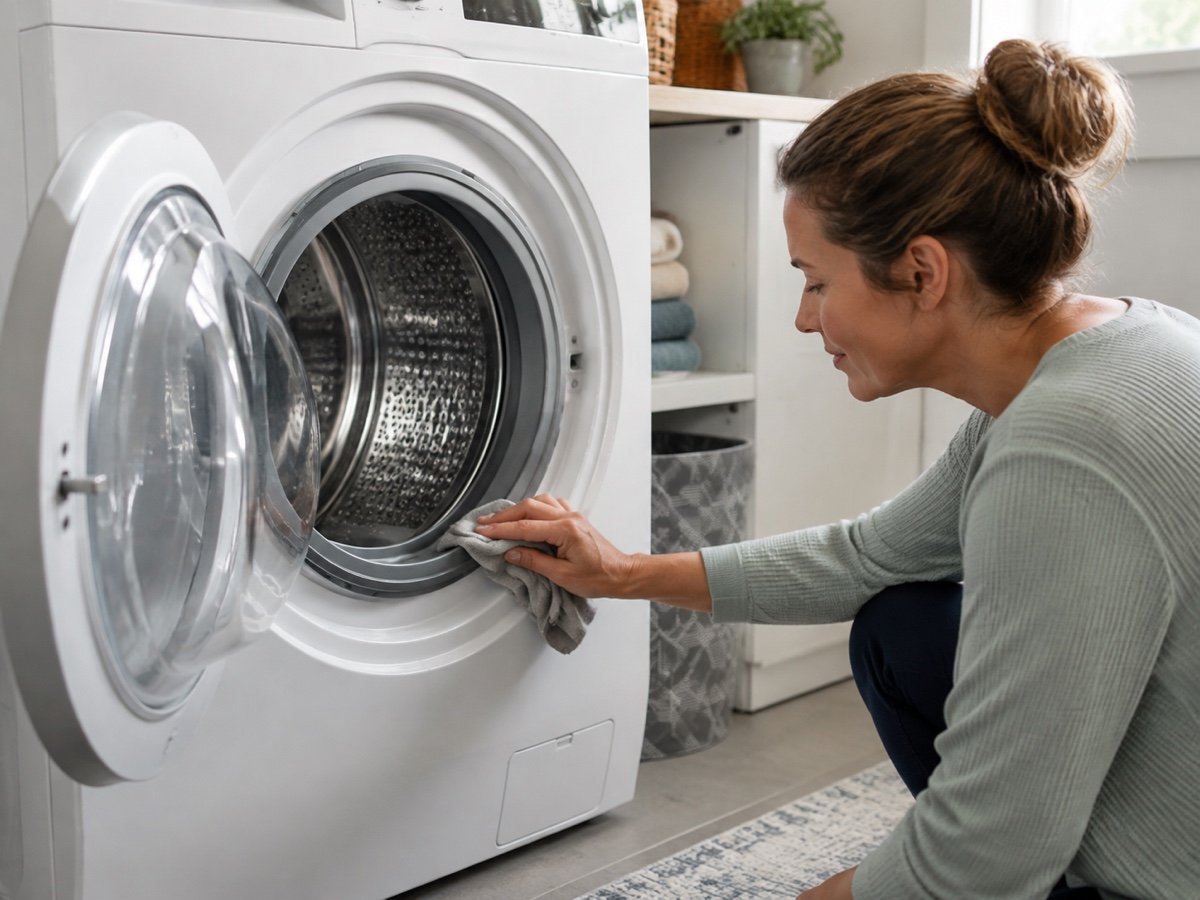
Quick Diagnosis
The smell is obvious when you open the door or lid
Treat the washer as the likely source. Check visible moisture or residue, then follow the model’s approved tub-clean procedure.
The smell is strongest around the gasket or detergent drawer
Clean only those accessible surfaces as the manual allows, then dry the area and leave the door or drawer open for ventilation.
The washer smells and several loads of clothes smell
Check the washer’s maintenance path, detergent use, and wet-load timing. The odor may be transferring to laundry.
The washer seems fine, but clothes smell after indoor drying
The drying stage may be the better first branch. Check drying time, spacing, airflow, and damp storage before treating the washer as the source.
It smells like sulfur, rotten eggs, or sewage
Stop treating it as ordinary mustiness. Check drain-hose placement and the standpipe arrangement against the owner’s manual.
The smell returns after cleaning
Recheck which area was actually cleaned and whether the drain setup, wet laundry, or clothes point to a different source.
What cleaning is safe to try
Once the symptom points to routine washer maintenance, keep the response model-specific:
- Empty the washer completely and remove visible items.
- Follow the owner’s manual for its Clean Washer, Tub Clean, or Self Clean cycle.
- Use only the cleaner or bleach procedure that the manual approves for that model, in the stated amount. Do not add laundry, detergent, or another chemical to the same procedure.
- Clean the gasket and dispenser separately only within the manual’s accessible surface-cleaning instructions.
- Run any rinse step the manual requires, then leave the interior open to dry.
Whirlpool’s guidance similarly emphasizes the approved clean-washer procedure, correct detergent type and amount, and ventilation after the cycle. Those directions are boundaries, not a universal recipe for every brand.
Do not mix bleach with other cleaners unless the washer manual and product directions explicitly allow it. Never mix bleach with ammonia or acidic cleaners such as vinegar. Do not combine separate internet recipes, pour an unapproved product into the dispenser, or assume that more heat or more cleaner will reach the right part of the machine. Do not disassemble the washer, remove a drain filter, disconnect a drain hose, or work on internal components as a general household step; those actions are model- and situation-dependent.
If the washer smells when it is empty
Open the door or lid after the washer has been unused for a while. If the smell is already present with no laundry inside, the washer is a reasonable first suspect. Look without dismantling anything for moisture, gasket residue, or a coated dispenser.
That does not mean the visible area is the only source, or that mold is necessarily the cause. Use the model’s approved Clean Washer, Tub Clean, or Self Clean instructions rather than choosing a hotter cycle or stronger product at random.
If the washer smells only after a cycle, note whether the odor is strongest immediately when the door opens or develops later. Promptly removing wet laundry and allowing the interior to dry are useful prevention steps, but they will not correct every drain or service problem.
If the gasket or detergent drawer smells
Check the door seal and detergent drawer separately. A front-load gasket can hold moisture or visible residue in its folds, while a drawer or its housing can retain product residue when closed damp.
Follow the owner’s manual for your model. Where it permits surface cleaning, use a soft cloth or brush with the approved mild-soap-and-water method, rinse removable drawer parts as directed, and dry them before replacing them. Wipe accessible gasket folds gently; do not stretch, puncture, or remove the seal. Leave the door or lid and drawer open when safe.
Wiping the gasket does not prove the entire washer is clean. If the smell remains, use the model-approved tub-clean and drain instructions; do not open the cabinet, remove a pump, or disconnect a hose based on generic advice.
If the washer is fine but the clothes smell
Separate the machine test from the laundry test. Does the empty washer smell? Does the odor affect every load or only one item? Is it present at the end of the cycle, during drying, or after wearing?
If the washer itself smells clean but clothes smell only after indoor drying, the washer may not be the first place to investigate. Drying time, spacing, airflow, and damp storage can change the pattern; use the indoor air-drying guide instead.
If only towels smell when they become wet again, or activewear smells when it is worn, those are different timing-based problems. If the odor begins immediately after washing across unrelated loads, return to the washer, product amount, wet-load timing, and approved maintenance checks.
If it smells like sewage or sulfur
A sulfur, rotten-egg, or sewage-like odor deserves a separate check. Samsung’s washer support guidance identifies drain-hose placement as a possible cause when drained water can siphon back toward the washer. The exact hose depth, air gap, and standpipe requirements vary by model and installation, so use your owner’s manual rather than copying a universal measurement.
Look for an installation clue described by the manual, such as a drain hose inserted too far into the standpipe or a hose that is not secured correctly. Do not repeatedly run cleaning cycles to mask a drain or plumbing problem. If the setup is correct but the odor continues, or if there is slow drainage, backflow, or standing water, use the washing machine not draining guide for that drain-stage problem before moving to appliance or plumbing support. If clothes are also unusually wet, see Why Are My Clothes Soaking Wet After Washing? for that separate diagnosis.
If the smell comes back after cleaning
Recurrence can mean the cleaning cycle did not address the smelling area, the seal or drawer remains damp, the drain setup is involved, or the odor is introduced by wet laundry or drying.
Change one variable at a time:
- If the empty washer still smells, confirm that you followed the model-approved maintenance check correctly before repeating it.
- If the washer smells better but clothes still smell, compare the timing of the odor and whether the problem affects every load.
- If the smell is sulfur-like, return to the drain-hose and standpipe branch rather than using another cleaner.
- If the smell appears only during indoor drying, investigate the drying location and use the related guide.
- If the smell persists after the manual’s cleaning procedure, stop escalating household chemicals and arrange support.
When to stop cleaning and get service
Stop using the washer and seek manufacturer or qualified service support for a burning or electrical smell, especially if it returns after initial use or occurs with abnormal operation. Do not try to diagnose wiring, motors, controls, or a drive system from the odor alone.
Arrange support when a sewage-like odor persists after the documented drain setup is correct, when water backs up or remains, when leaks or repeated drain problems appear, or when an error code or unusual noise accompanies the smell. Persistent inaccessible buildup is also a reason to use the model’s service path rather than opening the cabinet.
Prevention after the source is clear
- Remove wet laundry promptly when the cycle ends.
- Leave the door or lid and detergent drawer open to allow the machine to dry, when safe and practical.
- Use the detergent type and amount specified for the washer and product.
- Follow the model’s maintenance interval and cleaning instructions.
- Keep the gasket and drawer within the manual’s accessible cleaning routine.
- If the pattern changes, reassess the location and timing instead of repeating the same cleaning step.
For more laundry troubleshooting, visit the Laundry troubleshooting hub.